
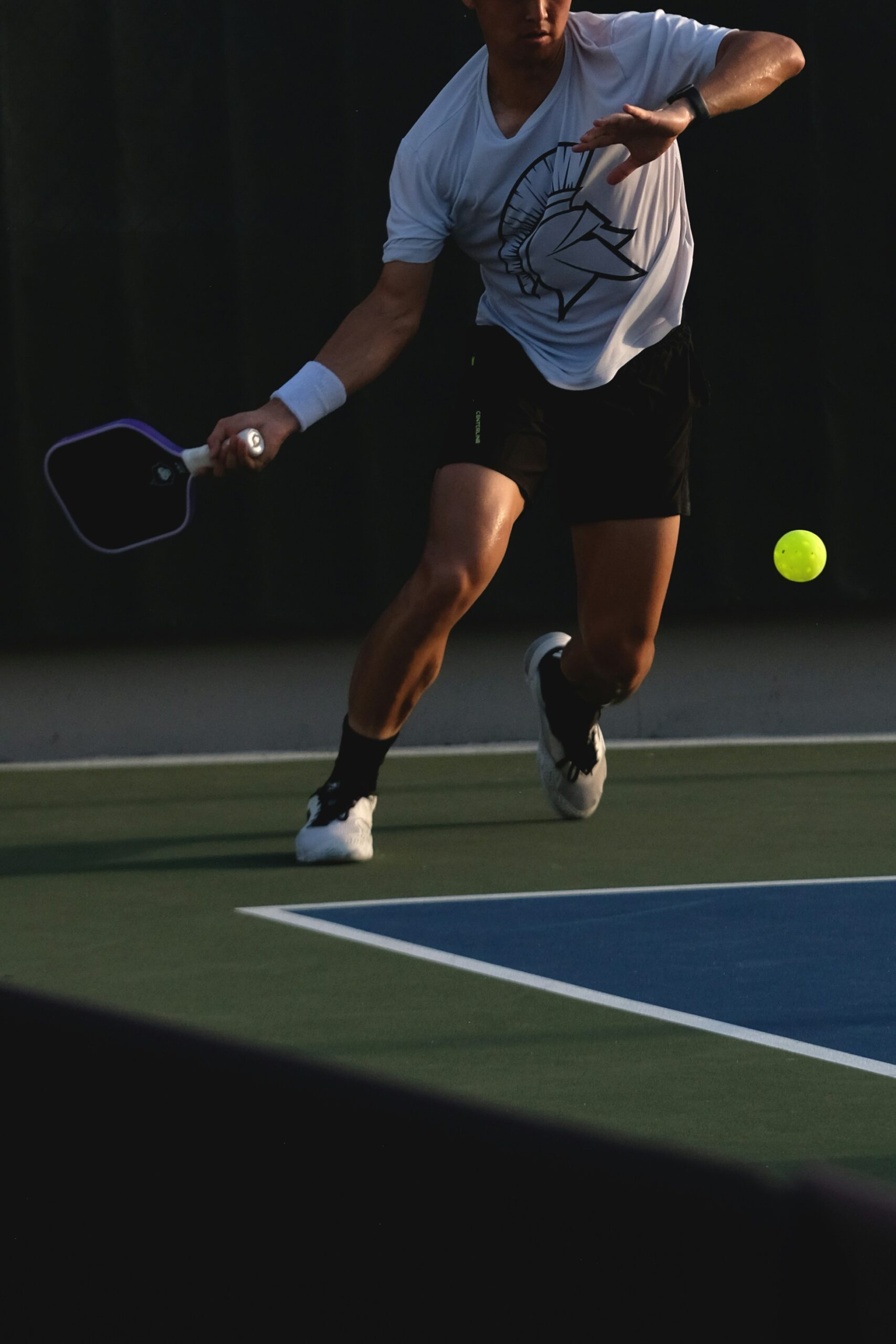
什么时候该用双反丁克?
Summary
全天候匹克球 (All-Weather Pickleball) on when the two-handed backhand dink is the right choice, drawn from their 4.0 to 4.5 experience. They split it into defensive/neutral two-handers (neutralize incoming topspin into a ball with some forward pace, not a dead half-volley that bounces straight up) and offensive two-handed topspin rolls off dead or neutral balls. The two-hander demands good footwork, the ball at a comfortable height and distance, and early arrival. For balls that are too far, too low or jammed at your body, they recommend a one-handed backhand push or slice (natural open face, more reach, more stability) or a half-volley block.
Key takeaways
- Defensive two-hander: neutralize topspin, don’t send a dead ball that sits up
- Offensive two-hander: roll dead or neutral balls in your comfort zone
- Too far, too low or jammed = one-handed backhand push/slice
- The two-hander isn’t for every ball or every player; it needs footwork and low posture
Action items
- In dink drills, call ‘two-hand’ only when the ball is in your comfort zone
- Practice one-hand BH slice-push on low, wide balls
- Compare a dead half-volley vs a neutral topspin reply and watch the bounce
- Watch how the hosts demonstrate each ball type