Basic Physics: Above the Net You Attack; Below It You Hit Up
Universal Rackets dumbs strategy down to physics. When you contact above the net you can swing high-to-low — offense and pace are on.

Universal Rackets dumbs strategy down to physics. When you contact above the net you can swing high-to-low — offense and pace are on.

Universal Rackets reframes power as space. A ball jammed into the body — theirs or yours — leaves only a block.
Universal Rackets names grip pressure as the number-one cause of popped-up resets. Squeeze the paddle and it gets bouncy — the ball springs up off the face.

Universal Rackets says power leaks when the dominant hand alone takes the paddle back while the non-dominant arm hangs useless.

Universal Rackets wants one simple drill from the transition line: after contact, freeze the paddle. You can run it on drops or dinks.
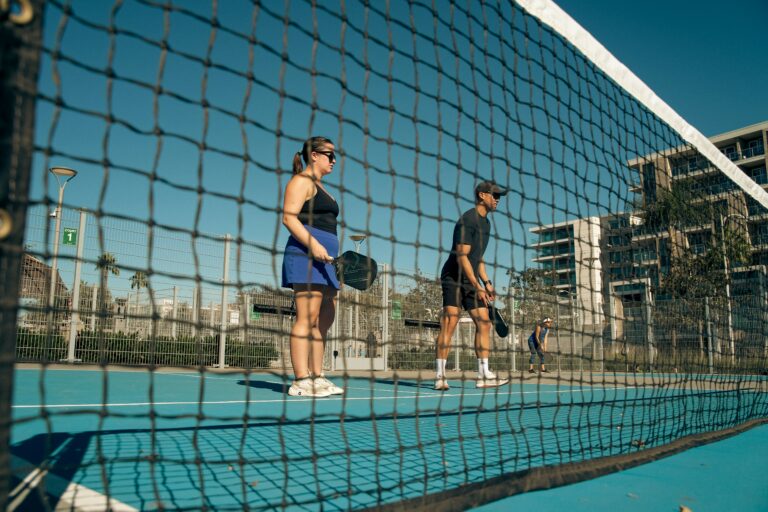
Universal Rackets breaks down why you keep getting beat down the line. Cause one: cheating middle to dictate with the forehand and leaving the sideline open.

Universal Rackets ties the sport’s rising pace to one skill: topspin that lets players swing bigger while keeping the ball in. Without overspin, hard contact just paints the fence — so the next level never arrives.
Universal Rackets frames inconsistent drives as a diagnosis problem, not bad luck. One drive is a winner; the next is long or in the net — and the first cause to check is spin.
Universal Rackets treats warm-ups as free intel. Hit varied looks — topspin, hard pace, slice, lob — and watch which ones each opponent mishandles.
Universal Rackets boils tougher hands exchanges down to three level-proof habits. First, keep the paddle up and out in front before the ball arrives — if it is still down, you are already late.